
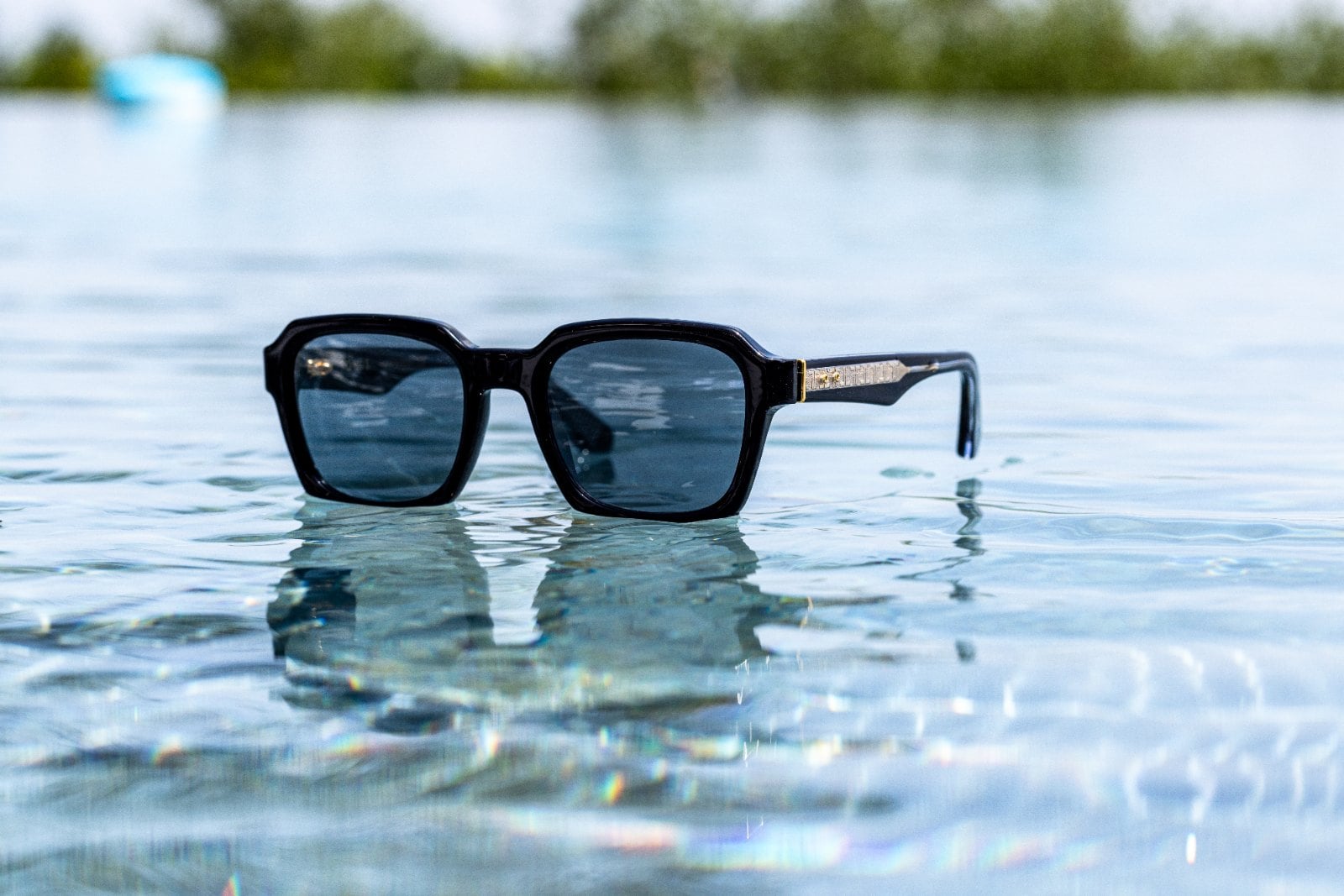
Most eyewear houses are named after a person or a place. A founder, a village, a street. Torus is named after a shape. In sacred geometry the torus is the ring form the brand describes as “the perfect flow of universal energy,” and the company took that as its name and made a “T” the heart of its visual identity. Then it named all six of its frames after things in the sky. We carry Torus at City Optix, on Chestnut Street in San Francisco’s Marina District, and it is one of the few lines in the shop where you can read the whole design philosophy off the product names before you ever pick one up. It sits among the other independent houses we carry.
What is Torus?
Torus Eyewear does not lead with heritage. It builds one collection, which it calls the Cosmos Collection, and the whole line is six styles: Cosmic, Aurora, Zenith, Twilight, Nebula and Luna. Each of the six comes as a sunglass and as an optical frame, so the shape you like in the sun is the same shape you can put a prescription in.
The naming is deliberate and the brand says so plainly. Its own line is that the styles “are modern interpretations of sophisticated classics that take their names from the remarkable celestial forces comprising our galaxy.” Aurora, zenith, nebula, luna. Those are not marketing words dressed up as model numbers. They are the actual vocabulary of the night sky, and the house uses them consistently across the entire range.
Then it does the opposite thing with the colors. The colorways are named for stone and raw material: Obsidian, Quartz, Jade, Agate, Carbon, Crystal, Sand. Only Sky looks back up. Whether or not the sacred geometry speaks to you, the naming runs on a system, and that is rarer in this category than it should be.
Six frames named for the sky, finished in stone. Only Sky looks back up.
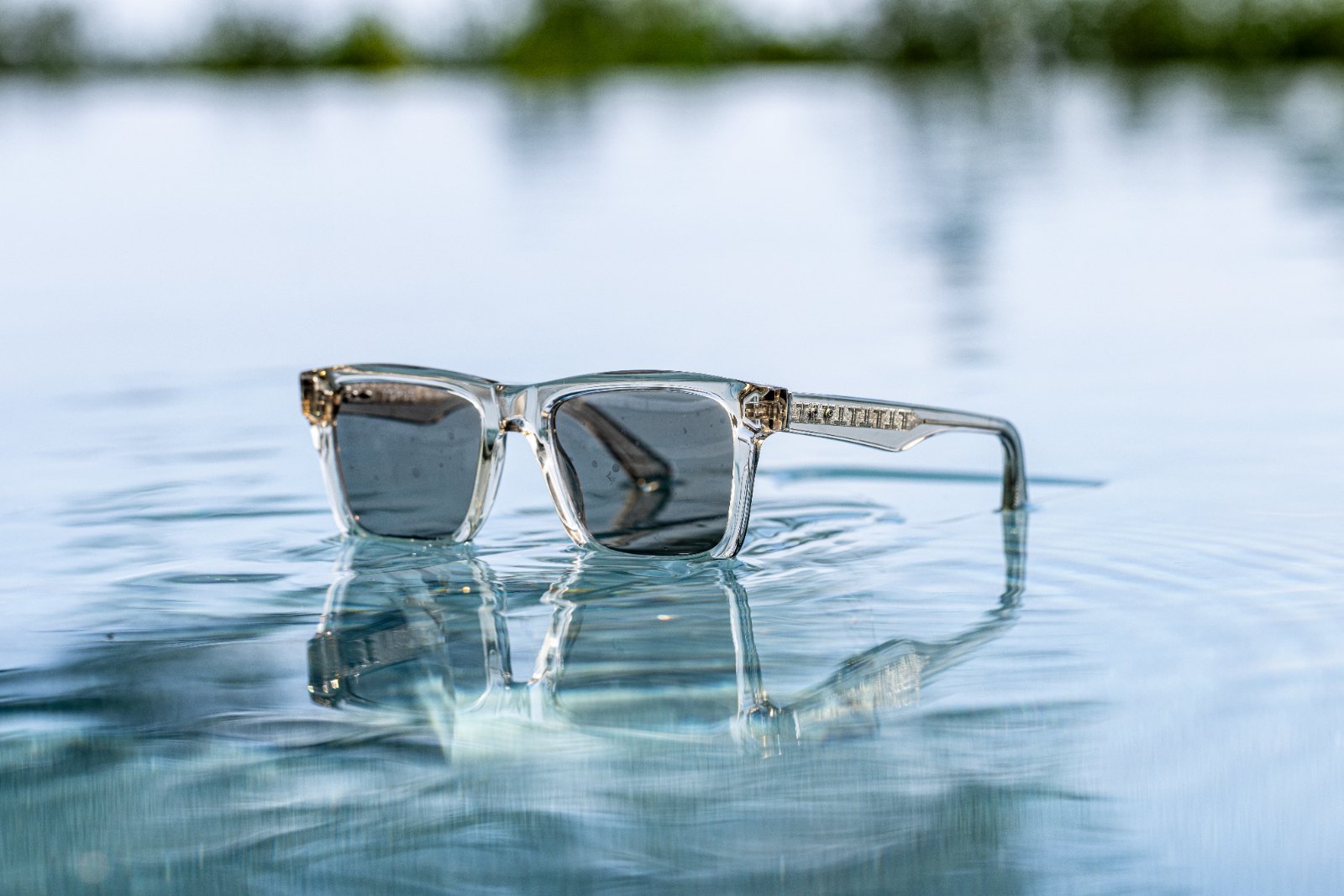
The company designs in California and manufactures in Europe. Its craftsmanship page puts it plainly: “Designed in Beverly Hills, Hand Crafted in Italy.” Orders ship from the brand’s own facility in Beverly Hills.
What makes Torus frames different?
Three things, and two of them you can feel in your hand.
The material story is unusual, and the brand is specific about it. Most acetate frames are made from cellulose acetate and leave it there. Torus goes further and says what it comes from. Its own FAQ describes the acetate as a natural polymer “sourced from a selection of renewable sources such as a certain variety of trees and cotton linters,” says the material “has high sustainability,” and adds that the cellulose is manufactured in Italy. That is a more particular claim than “handmade” or “premium,” and it is the sort of thing you can ask about at a counter.
The metal is beryllium. Torus specifies beryllium alloy for all metal components and describes it as a natural light-weight alloy, “stronger than steel yet lighter in weight than aluminum.” If you have worn a lot of acetate and found the weight distribution slightly off, the metal choice is part of why one frame sits differently than another.
The lenses are built to change. Torus calls it energy-adaptive technology, and what it means in practice is that the lenses shift shade with the light around you, indoors, outdoors, and under screen glare, with UV blocking throughout. The brand’s own framing is that this reduces decision fatigue, which is a fair description of the problem: most people who own both a clear pair and a dark pair spend part of every day carrying the wrong one. The tints run Blue, Apple Green, Taupe and Grey, activating to Grey, Brown, or a G-15 the brand describes as clarity enhancing.
Most people who own both a clear pair and a dark pair spend part of every day carrying the wrong one.
Who Torus is for
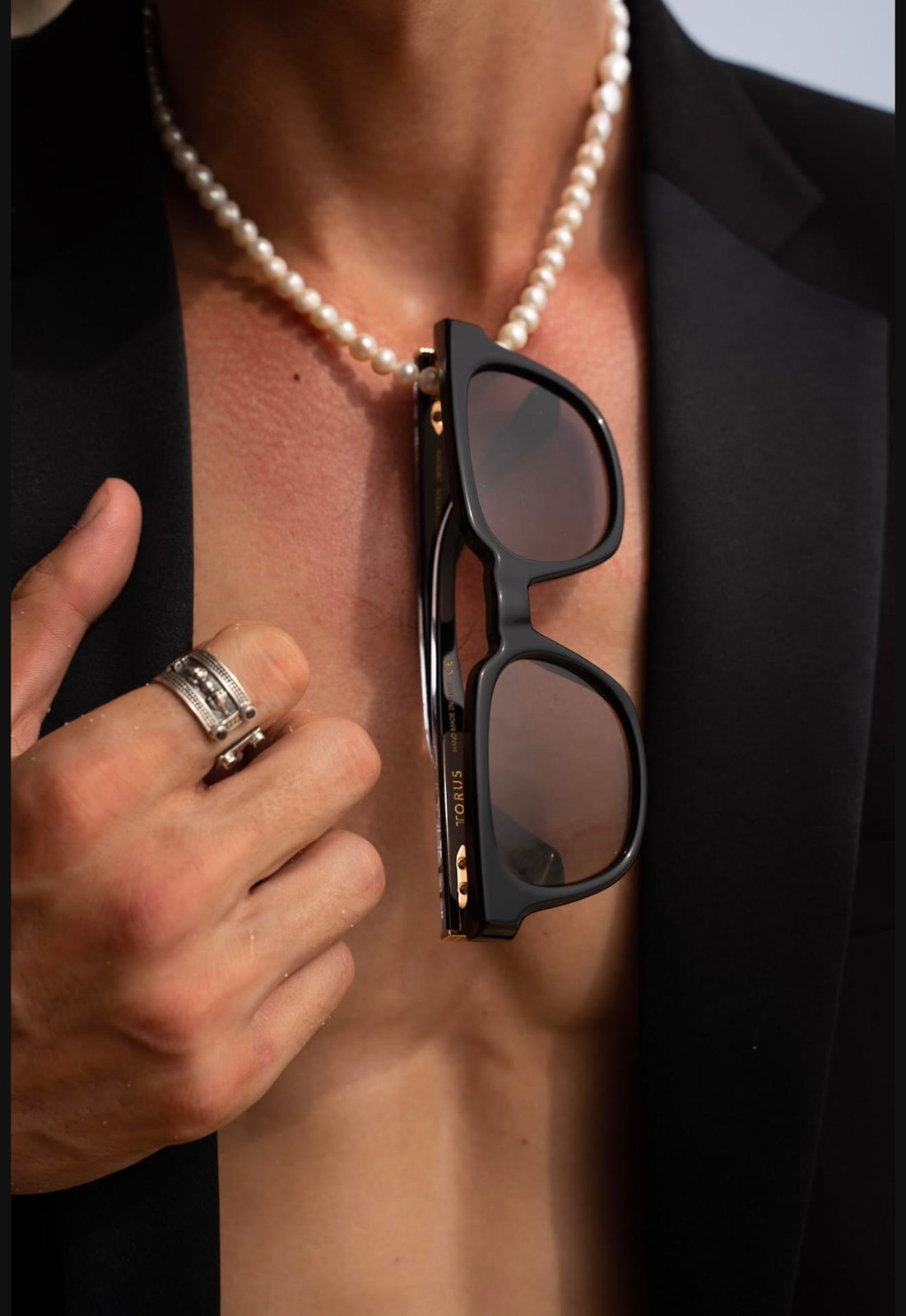
This is the frame for someone who wants the whole idea behind the object.
It suits the person who is tired of owning two pairs. If the adaptive lens does what Torus says it does, one frame covers the walk down Chestnut, the table by the window, and the afternoon at a screen. That is the practical center of this brand.
A six-shape collection sounds like a limitation until you have spent an hour in front of a wall of two hundred frames. A tight range that has been thought through end to end is easier to choose from.
Material matters to some people more than provenance does. Trees and cotton linters for the acetate, beryllium for the metal: that is a specific answer to a specific question, and Torus gives it without being asked.
And it suits someone who buys into an idea. Torus sells one collection, thought through.
How to tell if Torus is right for you
A few honest things worth knowing before you come in:
- Try the adaptive lens on a real errand, not under shop lights. Step outside with them on. The shift is the whole feature and you cannot judge it standing at a counter.
- Ask which of the six suits your face, and let us disagree with you. With only six shapes, the fitting conversation carries more weight. Luna is a cat eye. Cosmic runs sharper and more industrial. Twilight reads lifted and open.
- Handle the metal. Pick the frame up and feel its weight. If you already know you prefer a lighter metal in the frame, this is a line worth putting in your hands.
- Decide how much visible branding you want. If you want a frame that announces itself across a room, tell us and we will point you elsewhere in the shop.
- Come in ready to be fitted. A frame this specific still has to sit correctly on your particular face. That part is ours, and it takes a few minutes at the counter.
Frequently asked questions
Where can I try Torus eyewear in San Francisco? At City Optix, 2154 Chestnut Street, in the Marina District. We are an independent optometry practice and eyewear boutique led by Dr. Jeff Rich, O.D., open Monday through Saturday, 10 to 6. We carry Torus and we will fit the frame properly to your face at the counter. What is on the shelf changes, so come in and see, or call us at (415) 921-1444.
What is Torus eyewear? Torus Eyewear builds a single range it calls the Cosmos Collection: six styles named after celestial forces, Cosmic, Aurora, Zenith, Twilight, Nebula and Luna, each offered as both a sunglass and an optical frame. The brand takes its name from the torus shape in sacred geometry.
Where are Torus frames made? Torus states on its own craftsmanship page that its frames are designed in Beverly Hills and hand crafted in Italy, and that orders ship from its Beverly Hills facility.
What are Torus frames made of? Torus describes its cellulose acetate as a natural polymer sourced from renewable sources including certain trees and cotton linters, and says that cellulose is manufactured in Italy. Beryllium alloy is used for all metal components. Its lenses use what the brand calls energy-adaptive technology, changing shade with the surrounding light and blocking UV.
Come try a pair on Chestnut Street
Torus is a line that rewards handling. The weight of the beryllium in your hand, the way the lens moves when you step from the shop into the light on Chestnut, the difference between Luna and Zenith on your particular face: none of that survives a product photograph, and none of it is decidable from a screen. Come try them on at City Optix, 2154 Chestnut Street in the Marina, Monday through Saturday, 10 to 6. What is on the shelf changes, so come in and see, or call us at (415) 921-1444. We have spent more than thirty years in the Marina putting faces in frames that were chosen rather than settled for, and this is one we enjoy handing across the counter.