
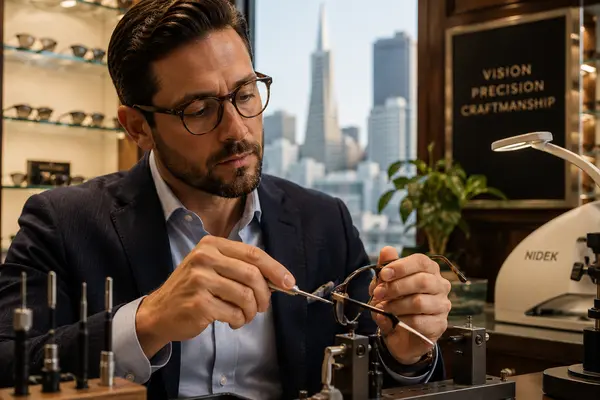
You’ve invested in quality eyeglasses with the perfect prescription and stylish frames—yet they slide down your nose constantly, create pressure headaches, or leave painful marks behind your ears. The problem isn’t your glasses. It’s the fit. Properly adjusted eyewear should feel so comfortable you forget you’re wearing it, yet most people tolerate significant discomfort rather than seeking professional adjustments that would solve their problems in minutes.
The difference between glasses you love and frames you tolerate comes down to millimeters—tiny adjustments to nose pads, temple angles, and frame alignment that transform uncomfortable eyewear into seamless extensions of yourself. These precision modifications require expertise and specialized tools, which is why online retailers offering “free home adjustments” fail so spectacularly. You wouldn’t perform dentistry on yourself with online instructions; eyewear fitting deserves similar professional respect.
At City Optix in San Francisco’s Marina District, Dr. Jeff Rich has perfected eyewear fitting over 37 years, understanding that prescriptions mean nothing if frames don’t sit properly on your face. His complimentary lifetime adjustments ensure every pair of glasses purchased at City Optix maintains optimal comfort and optical performance indefinitely. This comprehensive guide reveals everything San Francisco residents need to know about proper eyeglass fit, common comfort problems, professional adjustments, and why settling for poor-fitting frames compromises both your vision and quality of life.
Why Proper Eyeglass Fit Matters More Than You Think
Ill-fitting glasses create cascading problems extending far beyond mere annoyance:
Compromised Vision Quality: When frames sit incorrectly, your eyes aren’t positioned at the optical center of your lenses. This misalignment causes visual distortion, reduced clarity, and eyestrain—even with a perfect prescription. Moving glasses just 2-3mm off-center can significantly degrade optical performance.
Physical Discomfort: Pressure points behind ears, nose bridge pain, headaches, and red marks aren’t normal. They signal improper fit causing unnecessary suffering throughout your day.
Damaged Frames: Constantly pushing glasses up or adjusting them stresses hinges and materials, causing premature wear. Quality frames properly fitted last 10-20 years; poor-fitting frames fail within months.
Reduced Wearing Compliance: When glasses hurt, you remove them—defeating their purpose. Marina District professionals leave uncomfortable frames in desk drawers rather than wearing them during crucial meetings. Russian Hill residents squint through important moments rather than tolerating painful eyewear.
Professional Appearance Impact: Constantly adjusting slipping glasses projects lack of attention to detail. Nob Hill executives understand that well-fitted eyewear contributes to polished professional presence American Optometric Association.
Proper fitting isn’t luxury—it’s fundamental requirement ensuring your eyewear investment delivers intended benefits.
The Anatomy of Perfect Eyeglass Fit
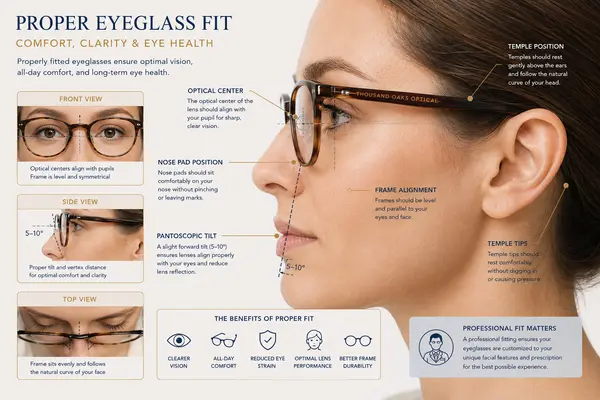
Understanding how glasses should fit helps you recognize when professional adjustment is needed:
Front Frame Positioning
Lens Height: Your eyes should sit approximately one-third down from the top of the lens opening. This positioning optimizes prescription effectiveness and peripheral vision. Too high or low causes visual compromises and appears unbalanced.
Frame Width: Frames should align with or slightly exceed your face width at the temples. Frames narrower than your face squeeze and look pinched. Frames excessively wide create gaps and instability.
Pupillary Distance Match: Your pupils must align with optical centers of your lenses. Even slight misalignment causes eyestrain, especially with higher prescriptions or progressive lenses. Dr. Rich measures pupillary distance precisely during every fitting.
Nose Bridge and Pad Fit
Contact Points: Nose pads should rest on the sides of your nose, distributing weight evenly. They shouldn’t pinch, leave deep indentations, or allow frames to slide.
Pad Width: Adjustable nose pads can be widened or narrowed matching your nose width. Properly set pads cradle without pressure.
Bridge Height: The bridge should position frames at appropriate height—not sitting too low (creating under-eye shadows) or too high (creating forehead pressure).
Material Considerations: Silicone pads offer soft comfort, while crystal or acetate pads provide firmer hold. Dr. Rich selects appropriate materials for your skin type and frame weight.
Temple (Arm) Fit and Angle
Length Adequacy: Temples should extend just past your ears without excess length creating loose fit or insufficient length causing pressure.
Bend Angle: The downward bend behind your ears (called the temple bend or drop) should match your head’s contour. Too sharp causes pressure; too gentle allows slipping.
Ear Contact: Temple ends should rest gently behind ears without digging in. Many frames feature adjustable temple tips improving comfort.
Tension Balance: Temples should hug your head with consistent light pressure—not gripping tightly or sitting so loose they shift constantly.
Overall Balance and Alignment
Level Positioning: Frames should sit level horizontally—not tilted with one side higher. Uneven positioning causes visual distortion and looks awkward.
Pantoscopic Tilt: Proper tilt angles frames slightly downward from top to bottom. This tilt optimizes vision through progressive lenses and positions single-vision lenses ideally.
Vertex Distance: The distance between your eyes and lenses affects optical performance, especially with strong prescriptions. Dr. Rich optimizes vertex distance during fitting.
No Wobbling: Quality-fitted frames don’t shift when you move your head, look down, or talk. Rock-solid stability without uncomfortable tightness defines professional fitting.
7 Common Eyeglass Fit Problems and Their Solutions
1. Glasses Constantly Slide Down Your Nose
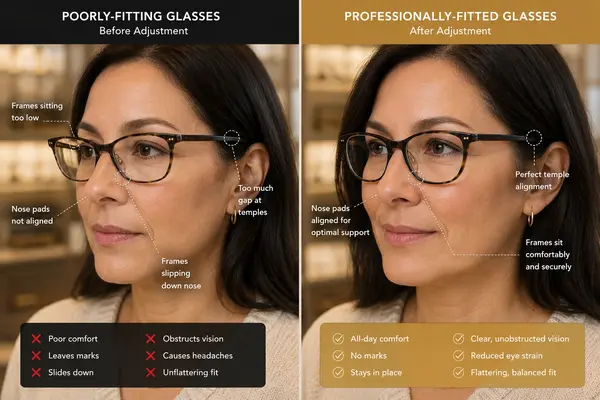
Causes: Loose temple tension, incorrect nose pad positioning, inadequate bridge fit, temple bend too gentle, or oily skin reducing grip.
Home Temporary Fix: Clean nose pads and frame with alcohol removing oils. Tighten temple screws if loose (very carefully).
Professional Solution: Dr. Rich adjusts temple angles increasing hold without uncomfortable pressure, repositions nose pads for better grip, and may add anti-slip coatings to nose pads. Sometimes frame replacement with better-suited bridge design solves chronic slipping.
Marina District Solutions: San Francisco’s marine humidity and active lifestyles exacerbate slipping. Dr. Rich recommends frames with secure bridge designs and adjusts specifically for Bay Area conditions.
2. Painful Pressure Behind Ears
Causes: Temples too tight, incorrect temple bend angle, hard temple tips, or frame shape mismatch with head shape.
Home Temporary Fix: Gently pull temples outward (very slightly and carefully). Apply moleskin padding to temple tips temporarily.
Professional Solution: Dr. Rich adjusts temple tension, softens bend angles, replaces hard temple tips with softer materials, or recommends frames better suited to your head shape. Quality adjustments eliminate pressure while maintaining security.
Nob Hill Executive Consideration: All-day boardroom wear requires zero discomfort. Dr. Rich ensures frames remain comfortable through full business days without adjustment needs.
3. Nose Bridge Discomfort and Red Marks
Causes: Nose pads too narrow or tight, bridge design unsuited to nose shape, excessive frame weight, or material allergies.
Home Temporary Fix: Apply silicone cushions to nose pads (drugstore temporary solution). Clean pads removing buildup causing irritation.
Professional Solution: Dr. Rich widens or repositions nose pads, replaces pads with larger or different material versions, adjusts frame angle reducing nose pressure, or recommends lightweight frame alternatives. For metal allergies, hypoallergenic pad materials solve problems.
Important Note: Persistent painful nose marks aren’t normal and shouldn’t be tolerated. They signal improper fit requiring professional correction.
4. Headaches When Wearing Glasses
Causes: Incorrect prescription (primary suspect), improper optical centering, excessive temple pressure, wrong pantoscopic tilt, or inadequate adaptation time for new prescriptions.
Home Assessment: Note when headaches occur. Immediately with glasses suggests fit issues. After 20-30 minutes suggests prescription or alignment problems. Upon removal might indicate eye muscle strain.
Professional Solution: Dr. Rich first verifies prescription accuracy through comprehensive eye exam. If prescription is correct, he checks optical centering, adjusts frame positioning, and optimizes all alignment parameters. Headaches should never persist beyond 1-2 week adaptation period.
Russian Hill Student Note: Extensive study sessions demand comfortable eyewear. Headache-inducing glasses sabotage academic performance unnecessarily.
5. Frames Sitting Crooked or Uneven
Causes: Bent frames from dropping or sitting on them, uneven temple tension, misaligned hinges, or warped frame front.
Home Risk: Never attempt bending metal or plastic frames yourself—you’ll likely break them. Temperature and specialized tools are required.
Professional Solution: Dr. Rich uses heat (for acetate) or specialized pliers (for metal) achieving precise alignment. Proper realignment requires expertise preventing material damage while achieving perfect symmetry.
City Optix Advantage: Lifetime complimentary adjustments mean you never pay for realignment when accidents happen. Bring bent frames immediately—left untreated, misalignment worsens.
6. Lenses Too Close to Face or Eyelashes Touching
Causes: Incorrect pantoscopic tilt, nose pads positioned too close, frame shape unsuited to facial features, or high prescription creating thick lenses.
Problems Created: Lashes smudging lenses constantly, claustrophobic feeling, reduced airflow causing fogging, and compromised vision quality.
Professional Solution: Dr. Rich adjusts pantoscopic tilt pushing frames away from face, repositions nose pads increasing distance, or recommends frames with deeper lens positioning. For high prescriptions, he suggests high-index lenses reducing thickness.
Marina District Active Lifestyle: Athletes and outdoor enthusiasts need adequate ventilation preventing fogging during activities. Proper positioning solves this problem.
7. Frames Feel Loose and Insecure
Causes: Stretched temples from age and use, loose screws, hinges wearing out, or frame selection too large for face.
Dangers: Loose frames shift during activity, compromising vision when you need it most—while driving, cycling, or playing sports.
Professional Solution: Dr. Rich tightens screws, adjusts temple tension, may replace worn components, or recommends new frames if existing ones can’t achieve secure fit. Quality frames with spring hinges maintain tension better than cheap alternatives.
Replacement Decision: Frames unable to maintain adjustment after professional correction should be replaced. Continuing with loose-fitting eyewear compromises safety and vision.
Professional Frame Adjustment: What Happens at City Optix
When you visit City Optix for frame adjustment, Dr. Rich follows a systematic process ensuring optimal results:
Comprehensive Fit Assessment
Dr. Rich evaluates your frames while you’re wearing them, identifying specific issues: where frames contact your face, pressure point locations, optical centering accuracy, level positioning and alignment, and temple tension and comfort.
He asks about your concerns—what bothers you specifically. Combining observation with your feedback creates complete understanding of needed adjustments.
Precise Measurements
Using specialized tools, Dr. Rich measures:
-
- Pupillary distance confirming optical center alignment
-
- Pantoscopic tilt angle
-
- Vertex distance (eye-to-lens spacing)
-
- Frame dimensions and temple lengths
-
- Bridge width and nose pad spacing
These measurements guide adjustments ensuring both comfort and optical performance.
Careful Adjustment Process
For Metal Frames: Dr. Rich uses specialized pliers that grip without marring finishes. He makes incremental adjustments, checking frequently—never forcing or rushing.
For Acetate Frames: He carefully heats plastic to precise temperatures allowing adjustment without damage. Acetate requires specific heat ranges—too little and it won’t bend; too much causes bubbling or breakage.
For Mixed Materials: Combined metal/acetate frames require understanding both materials’ properties and adjusting each component appropriately.
Testing and Verification
After adjustments, Dr. Rich has you wear frames for several minutes, engaging in typical movements: looking down (reading position), moving head side to side, nodding up and down, and talking (many people’s glasses shift while speaking).
If frames shift, slip, or create discomfort, he makes additional refinements until achieving perfect fit.
Education and Care Instructions
Dr. Rich explains what he adjusted and why, teaches you how to recognize when re-adjustment is needed, provides proper care instructions preventing fit problems, and schedules follow-up if needed for complex adjustments.
The Technology and Tools of Professional Frame Fitting
Proper eyewear adjustment requires specialized equipment unavailable to consumers:
Frame Warmers: Controlled heating units bringing acetate to optimal adjustment temperature without overheating. Home hair dryers can’t achieve consistent safe temperatures.
Optical Pliers: Dozens of specialized plier types for specific tasks: nylon-jaw pliers preventing finish damage, nose pad pliers accessing tight spaces, temple-adjusting pliers achieving precise bends, and screw-tightening tools preventing lens scratches.
Pupillometer: Digital instruments measuring pupillary distance with sub-millimeter precision. “Close enough” measurements compromise optical performance.
Frame Alignment Tools: Specialized templates and measuring devices ensuring perfect symmetry. Eyeballing alignment misses subtle asymmetries causing problems.
Replacement Parts: Professional opticians stock nose pads, screws, temple tips, and hinges in dozens of sizes and materials. Matching exact components maintains frame integrity.
Experience and Expertise: Most important “tool” is Dr. Rich’s 37 years of knowledge: understanding how different materials respond, recognizing which adjustments solve specific problems, knowing when frames can’t be adjusted satisfactorily, and identifying manufacturing defects requiring frame replacement.
Marina, Russian Hill, and Nob Hill residents understand that some expertise can’t be replaced with DIY tutorials or online videos. Professional frame fitting falls squarely in that category.
Why Online Glasses Fail the Fit Test
Online eyewear retailers seduce consumers with low prices but can’t deliver what matters most: proper fit. The process reveals inherent limitations:
No Professional Measurement: You measure your own pupillary distance using phone apps or mirrors—introducing errors that compromise optical quality.
Guess-Based Selection: Choosing frames from photos provides no sense of how they’ll actually fit your unique facial structure.
Generic Sizing: One-size frames or limited size options can’t accommodate facial diversity. Professional optical boutiques offer dozens of size variations within similar styles.
Zero Adjustment: Frames arrive as-is. If they don’t fit, your options are DIY adjustment (risky) or return/replacement (starting process over).
No Ongoing Service: When fit degrades after months of wear—inevitable with any frames—online retailers provide no adjustment service. You’re back to ordering new glasses rather than adjusting existing ones.
Material Quality Issues: Cheap frames and materials don’t hold adjustments. You might achieve temporary fit, but it won’t last.
City Optix patients who tried online glasses often share similar stories: frames that looked perfect in photos felt wrong immediately upon arrival. Attempting adjustments resulted in broken frames. Returning glasses repeatedly proved more expensive than buying quality with professional fitting initially.
The few hundred dollars saved evaporate when you calculate: wasted time dealing with returns, multiple replacement orders, frames ultimately unworn because they don’t fit, and eventual purchase of properly fitted glasses anyway.
Dr. Rich has fitted glasses for thousands of Marina District residents who learned this lesson—often after expensive online eyewear experiments. Professional fitting isn’t optional luxury; it’s fundamental requirement for functional, comfortable eyewear.
When to Seek Frame Adjustment
Don’t wait until discomfort becomes unbearable. Visit City Optix for adjustment when you notice:
Immediate Signs:
-
- Glasses sliding down nose repeatedly throughout day
-
- Pressure points behind ears or on nose
-
- Red marks or indentations after removing glasses
-
- Headaches that resolve when removing eyewear
-
- Frames sitting crooked or uneven
-
- Lenses touching eyelashes or sitting too close to face
Gradual Changes:
-
- Frames feeling looser than when purchased
-
- Needing to adjust glasses more frequently
-
- Eyestrain that developed gradually
-
- Frames shifting during normal activities
After Specific Events:
-
- Dropping or sitting on glasses
-
- Leaving frames in hot cars
-
- Children or pets chewing on temples
-
- Any visible bending or damage
Routine Maintenance: Even without obvious problems, City Optix recommends adjustment visits every 3-6 months. Frames settle and shift gradually—professional maintenance prevents small issues from becoming significant problems.
Russian Hill residents often schedule adjustment appointments during other errands in Marina District. Nob Hill professionals stop by during lunch breaks from downtown offices. Five minutes of professional attention prevents hours of cumulative discomfort.
Special Fitting Considerations for Different Frame Materials

Different materials require different adjustment approaches:
Acetate Frames
Adjustment Method: Careful heating to 120-140°F allowing controlled bending. Too much heat causes bubbling or melting; too little prevents adjustment.
Advantages: Highly adjustable when properly heated, holds adjustments well once cooled, and can be reshaped multiple times.
Limitations: Home adjustment very risky—acetate breaks easily when bent cold or overheated.
City Optix Expertise: Dr. Rich’s experience with high-end European acetates ensures perfect adjustments without damaging premium finishes or patterns.
Titanium Frames
Adjustment Method: Memory-free titanium allows gentle cold bending. Beta-titanium (more flexible) springs back—requiring different techniques.
Advantages: Extremely lightweight reducing comfort issues, corrosion-resistant for San Francisco’s marine environment, and hypoallergenic for sensitive skin.
Limitations: Requires understanding titanium alloys’ specific properties. Wrong technique damages frames.
Professional Equipment: Specialized titanium tools prevent marring highly polished finishes.
Stainless Steel Frames
Adjustment Method: More rigid than titanium—requires careful leverage and appropriate plier selection.
Advantages: Very durable and economical compared to titanium, thin profiles possible with adequate strength.
Limitations: Can work-harden with repeated adjustments—eventually becoming impossible to modify.
Mixed Material Frames
Adjustment Method: Each component requires appropriate technique—acetate sections heated, metal sections bent cold.
Complexity: Requires expertise with multiple materials and understanding how they interact.
City Optix Advantage: Dr. Rich’s collection focuses on quality mixed-material frames designed for adjustability—not cheap hybrids that crack at material transitions.
Maintaining Optimal Fit: Daily Care and Habits
Between professional adjustments, these habits maintain fit:
Always Use Both Hands: Remove glasses using both hands, pulling straight off. One-handed removal stresses frames unevenly, causing misalignment.
Proper Storage: Always store in protective cases—never loose in bags, pockets, or purses where they can bend.
Avoid Heat Exposure: Don’t leave glasses on dashboards, near stoves, or in hot cars. Heat relaxes adjustments and can warp frames.
Clean Regularly: Buildup on nose pads reduces grip, causing slipping. Daily cleaning prevents this problem.
Tighten Screws Proactively: Check screws monthly. If any feel loose, visit City Optix for professional tightening—don’t wait until they fall out.
Don’t Push on Lenses: Adjust frames by holding frame fronts or temples, never pushing on lenses. Pressure on lenses loosens settings and can crack them.
Wear Properly: Place glasses on your face—don’t perch them on your head. This stretches temples and distorts fit.
Marina District active lifestyles particularly stress frames. Dr. Rich recommends dedicated sport glasses for rigorous activities, protecting dress eyewear for daily wear.
The City Optix Lifetime Adjustment Commitment
When you purchase eyewear from City Optix, you receive lifetime complimentary adjustments—a commitment few optical providers offer and that online
retailers can’t match:
No Appointment Necessary: Walk in during business hours. Dr. Rich or his trained staff handles adjustments while you wait—usually within 5-10 minutes.
Unlimited Visits: Return as often as needed. Active lifestyles that stress frames weekly? Come weekly. Frames staying perfect for months? Come when needed.
All Frame Types: Whether you purchased acetate, titanium, rimless, or mixed material frames, all receive expert adjustment indefinitely.
Honest Assessment: If frames can’t be adjusted satisfactorily—perhaps due to damage or wear—Dr. Rich tells you honestly rather than performing ineffective adjustments repeatedly.
Parts Replacement: Nose pads, screws, and temple tips wear out. City Optix replaces these components complimentary for frames purchased there.
Emergency Service: Broken frames before important meetings or events? Dr. Rich prioritizes emergencies, often providing temporary or permanent solutions within minutes.
This lifetime service commitment reflects understanding that proper fit isn’t one-time event—it’s ongoing relationship between you, your frames, and your optician. The value of this service over years far exceeds initial frame costs, making City Optix’s investment approach more economical than cheap online alternatives requiring complete replacement when fit fails.
Russian Hill, Marina District, and Nob Hill residents appreciate this old-school commitment to long-term relationships over transactional sales. It’s why City Optix patients remain loyal for decades, why they refer family and friends, and why they never consider returning to impersonal chain stores or risky online retailers.
Your Glasses Should Feel Like Nothing
The best-fitting glasses are the ones you forget you’re wearing—no pressure, no slipping, no constant adjustment. This effortless comfort doesn’t happen by accident; it results from expert fitting, quality frames designed for adjustability, and ongoing professional maintenance ensuring sustained performance.
Your vision deserves better than tolerating discomfort or compromising optical quality due to poor fit. Whether you purchased frames elsewhere and need professional adjustment or you’re ready to invest in properly-fitted quality eyewear, Dr. Jeff Rich and City Optix provide the expertise ensuring your glasses enhance your life rather than burden it.
Visit City Optix at 2154 Chestnut Street in San Francisco’s Marina District for expert eyeglass fitting and adjustment. Call (415) 921-1444 for immediate service or walk in during business hours. Dr. Rich’s 37 years of fitting expertise ensures your glasses feel comfortable and perform optimally every day. Complimentary lifetime adjustments for all City Optix eyewear purchases.
About the Author: Dr. Jeff Rich, OD, has provided expert eyewear fitting and adjustment services to San Francisco residents since 1988. With over 37 years of experience in optical fitting, frame selection, and professional adjustments, Dr. Rich understands that perfect prescriptions mean nothing without proper frame fit. His practice, City Optix, serves Marina District, Russian Hill, and Nob Hill clients seeking comfortable, properly-fitted eyewear with lifetime professional support.
FAQ SECTION
Q: How do I know if my glasses fit properly?
A: Properly-fitted glasses should sit comfortably without pressure points, remain stable during normal head movement, align with your face symmetrically without tilting, position your eyes in the optical center of lenses, and not leave marks or create headaches. If you constantly adjust glasses or experience discomfort, visit City Optix Marina District for professional fitting assessment.
Q: Can I adjust my own glasses at home?
A: Minor screw tightening is safe, but bending, heating, or significantly adjusting frames risks permanent damage. Professional adjustment at City Optix takes 5-10 minutes and is complimentary for frames purchased there—far safer than attempting DIY adjustments that often result in broken frames requiring replacement.
Q: Why do my glasses keep sliding down my nose?
A: Sliding glasses result from insufficient temple tension, incorrect nose pad positioning, oily skin reducing grip, or inadequate bridge fit for your nose shape. Dr. Rich at City Optix adjusts temple angles and nose pads eliminating slipping without creating uncomfortable pressure. San Francisco’s humidity can exacerbate slipping—professional fitting addresses climate considerations.
Q: How often should I get my glasses adjusted?
A: Visit City Optix for professional adjustment every 3-6 months even without obvious problems. Frames settle gradually and benefit from preventive maintenance. Additionally, seek adjustment immediately when noticing discomfort, slipping, pressure points, or after dropping or sitting on glasses. City Optix provides unlimited complimentary lifetime adjustments for all eyewear purchased there.
Q: What causes painful pressure behind my ears from glasses?
A: Temple pressure results from excessive tightness, incorrect bend angles, hard temple tips, or frame shape mismatched to your head. This discomfort isn’t normal and shouldn’t be tolerated. Dr. Rich adjusts temple tension and angles, replaces hard tips with softer materials, or recommends better-suited frames eliminating pressure while maintaining security.
Q: Can all eyeglass frames be adjusted for comfort?
A: Quality frames with proper construction can be adjusted extensively. However, extremely cheap frames often break during adjustment attempts, and some rigid materials or poor construction limit adjustability. City Optix’s curated collection features frames specifically selected for superior adjustability, comfort, and long-term durability—avoiding problematic designs chains commonly stock.
Q: Why do online glasses never fit properly?
A: Online glasses lack professional measurement, personalized frame selection, initial expert fitting, and ongoing adjustment service. Self-measured pupillary distance often contains errors, choosing frames from photos can’t predict actual fit, and frames arriving as-is rarely match individual facial structures without professional adjustment. City Optix’s expert fitting ensures optimal comfort and performance impossible from online retailers.
Q: Where can I get professional eyeglass adjustment in San Francisco?
A: City Optix at 2154 Chestnut Street in Marina District provides expert eyeglass fitting and adjustment services. Dr. Jeff Rich offers complimentary lifetime adjustments for all City Optix eyewear and can adjust frames purchased elsewhere for a nominal fee. Walk-ins welcome—most adjustments completed within 5-10 minutes serving Marina District, Russian Hill, and Nob Hill residents.