
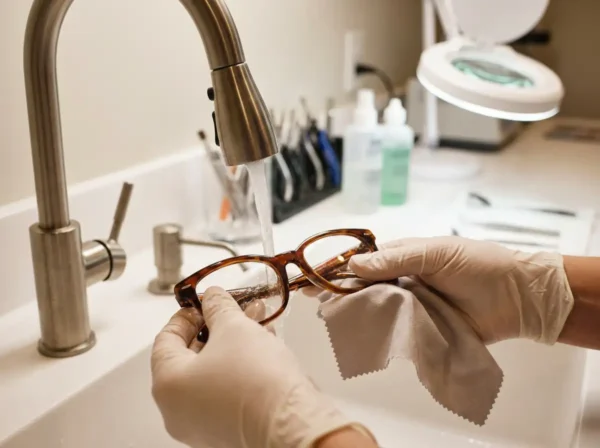
You just invested in beautiful designer frames from City Optix—handcrafted Italian acetate or precision-engineered titanium that cost more than many people spend on an entire wardrobe. These aren’t disposable fashion accessories from a chain store. They’re precision optical instruments crafted by artisans who spent months perfecting every curve, hinge, and finish.
With proper care, your luxury eyewear should last 10-20 years or even longer, developing character and patina like fine leather goods while maintaining structural integrity and optical performance. Yet most people treat their expensive frames with shocking carelessness—tossing them in bags, cleaning with whatever’s handy, and wondering why their investment looks worn and functions poorly after just months.
At City Optix in San Francisco’s Marina District, Dr. Jeff Rich has spent 37 years watching clients either preserve beautiful frames for decades or destroy them through well-intentioned but misguided care. The difference isn’t luck—it’s understanding how premium materials behave and what they need to maintain their beauty and function.
This comprehensive guide reveals everything you need to know about caring for luxury eyewear, from daily cleaning routines to storage strategies, seasonal maintenance, and when to seek professional help. Whether you’re wearing handcrafted European acetate, Japanese titanium, or exotic materials like buffalo horn or wood, these expert-backed practices will protect your investment and keep your frames looking and performing like new.
Why Luxury Eyewear Demands Different Care
Mass-market frames from chain stores are designed for short lifecycles—12-24 months before replacement. Manufacturers use cheaper materials, simplified construction, and finishes that prioritize initial appearance over longevity. When these frames degrade, it’s expected. You buy new ones.
Luxury independent eyewear operates on an entirely different philosophy. Brands like those at City Optix create frames intended to last decades, using materials and construction methods that improve with age when properly maintained. Italian acetate develops rich patina, premium hinges break in like fine mechanical watches, and quality finishes actually protect rather than merely decorate Eyewear Craftsmanship Institute.
This fundamental difference demands different care approaches. What works fine for disposable frames can permanently damage luxury eyewear. Conversely, the care protocols that preserve fine frames would be overkill for mass-market glasses you’ll replace next year anyway.
The True Cost of Poor Eyewear Care
Consider the mathematics: $800 designer frames that last 15 years with proper care cost $53 annually. The same frames destroyed by neglect within 3 years cost $267 annually—five times more, plus the inconvenience of replacement and the environmental waste of discarding barely-worn frames.
But financial cost is only part of the equation. Properly maintained frames retain their aesthetic appeal, maintain precise optical positioning, and avoid the chronic discomfort of loose hinges, bent temples, or deteriorating nose pads. They’re also repairable—City Optix can replace components, refinish surfaces, and restore frames that mass-market providers would declare “unrepairable.”
For Marina District, Russian Hill, and Nob Hill residents who value quality and sustainability, proper eyewear care aligns perfectly with the broader philosophy of buying well and maintaining carefully.
Daily Care: The Foundation of Frame Longevity

Daily habits make the biggest difference in frame lifespan. Small actions repeated hundreds of times compound into either preservation or destruction.
The Correct Way to Clean Your Luxury Frames
Most people clean their glasses wrong, causing micro-scratches that accumulate into noticeable damage. Here’s the professional protocol Dr. Rich recommends:
Step 1: Rinse with lukewarm water. Never start by wiping dry lenses—you’ll drag dust particles across surfaces, creating scratches. Hold frames under lukewarm (never hot) water for 15-20 seconds, washing away loose particles. Hot water damages lens coatings and can warp acetate frames over time.
Step 2: Apply pH-neutral soap. Use a tiny drop of mild, lotion-free dish soap—nothing with moisturizers, antibacterials, or fragrances. These additives leave residues on lenses and can degrade frame finishes. Gently rub lenses and frames with clean fingertips, paying attention to nose pads and temple tips where oils accumulate.
Step 3: Rinse thoroughly. Rinse under lukewarm water until no soap residue remains. Soap residue attracts dust and creates smearing.
Step 4: Shake dry. Hold frames by the bridge and shake gently to remove excess water. Never shake while holding temples—this stresses hinges unnecessarily.
Step 5: Air dry or use microfiber. Let frames air dry completely, or gently blot with a clean microfiber cloth. Never use paper towels, tissues, napkins, or clothing—these materials contain wood fibers that scratch lenses like sandpaper.
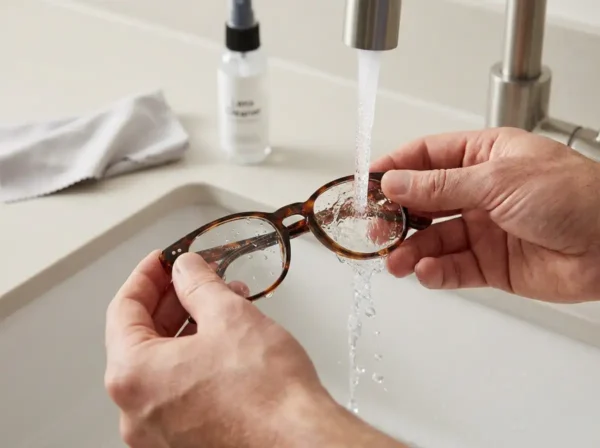
Frequency: Clean frames this way whenever visibly soiled and at minimum once daily. San Francisco’s marine climate means Marina District residents’ frames accumulate more salt residue than inland areas—daily cleaning prevents crystalline buildup that etches surfaces.
What NEVER to Use on Luxury Eyewear
Certain products permanently damage fine frames despite seeming harmless:
Glass cleaner (Windex, etc.): Ammonia-based cleaners destroy anti-reflective coatings within weeks and can cloud plastic lenses permanently.
Hand sanitizer: Alcohol content damages lens coatings and degrades acetate finishes. The gel base leaves sticky residues attracting dust.
Paper products: Paper towels, tissues, napkins, and toilet paper contain wood fibers that scratch lenses and frames like 400-grit sandpaper.
Clothing: Your shirt, scarf, or sleeve contains dust, dirt, and textile fibers that scratch. Never use clothing to clean lenses, no matter how soft it feels.
Hot water: Temperatures above 120°F (49°C) damage anti-reflective coatings, warp acetate, and stress laminated lenses. Always use lukewarm water.
Saliva: Despite the common practice of licking lenses, saliva contains enzymes that degrade coatings and introduces bacteria to nose pads.
Household cleaners: Bathroom cleaners, all-purpose sprays, and furniture polish damage eyewear materials and coatings. Only use products specifically designed for optical use.
Storage Strategies: Protecting Frames Between Wears
How you store frames when not wearing them determines whether they maintain perfect adjustment or develop the chronic looseness and warping that plagues poorly-cared-for eyewear.
The Hard Case Rule
Quality frames deserve quality cases—always. The elegant cases provided with City Optix purchases aren’t just packaging; they’re essential protective equipment. Hard cases prevent the three biggest threats to stored frames:
Crushing: Frames in bags, pockets, or loose on surfaces get sat on, stepped on, or crushed under books and devices. Even slight pressure bends temples and bridges, throwing off optical alignment. Russian Hill clients who commute via crowded MUNI buses particularly need hard case protection.
Scratching: Frames stored with keys, phones, pens, or other objects accumulate scratches on lenses and acetate surfaces. Hard cases create protective barriers preventing contact with damaging items.
Environmental exposure: Cases protect from dust, humidity extremes, temperature fluctuations, and accidental sprays of hairspray, perfume, or cleaning products that permanently damage coatings and finishes.
The Proper Storage Position
When placing frames in cases or setting them on surfaces temporarily:
Always fold temples completely: Partial folding stresses hinges unevenly, causing loosening and eventual failure. Fully folded temples distribute stress properly.
Never set lenses face-down: This seems obvious, yet people constantly set frames lens-down on counters, nightstands, and desks. Even on apparently clean surfaces, unseen particles scratch coatings. Always place frames lens-up or use the case.
Avoid extreme temperatures: Don’t store frames in cars (dashboard temperatures exceed 150°F/65°C in San Francisco summer sun), near heating vents, in bathrooms during hot showers, or other temperature extremes that warp materials and delaminate lenses.
Control humidity: San Francisco’s Marina District climate brings morning fog and afternoon dryness. Store frames away from bathroom humidity (which promotes corrosion) and desert-dry conditions (which can cause acetate to become brittle). Room temperature, moderate humidity is ideal.
Multiple Frames: The Rotation Advantage
Marina District professionals who invest in multiple frame styles enjoy benefits beyond fashion variety:
Extended lifespan: Rotating between 2-3 frames means each pair gets worn every third day rather than daily, tripling effective lifespan. It’s like the difference between shoes worn daily (1 year lifespan) and rotated every third day (3+ year lifespan).
Reduced lens wear: Lenses accumulate scratches and coating degradation through daily wear. Rotating frames distributes this wear, preserving optical quality longer.
Adjustment maintenance: Frames naturally loosen with wear. Rotating allows each pair to “rest,” with materials returning closer to original shape between wearings.
Prescription backup: When you inevitably need professional frame service, having backup prescription glasses prevents the “contact lenses only” scramble or functioning with suboptimal vision during repairs.
City Optix clients who maintain 2-3 frame rotations report that each pair lasts significantly longer than single pairs worn daily—often 15-20 years with proper care versus 5-7 years for daily-only wear.
7 Essential Maintenance Practices for Long-Term Frame Health
Beyond daily cleaning and proper storage, these practices preserve luxury eyewear over years and decades:
1. Professional Adjustments Every 3-6 Months
Frames gradually loosen with wear—it’s not defective construction, it’s physics. The repeated motion of putting frames on and removing them hundreds of times stresses every joint, screw, and contact point. City Optix provides complimentary professional adjustments for frames purchased in the practice.
What gets adjusted: Nose pad positioning, temple pressure, bridge fit, screw tightness, angle of lenses to eyes. Dr. Rich’s team uses specialized tools ensuring adjustments don’t damage finishes or stress materials improperly.
Why it matters: Properly adjusted frames maintain optical alignment (ensuring your prescription performs as designed), prevent pressure headaches, avoid slipping that causes constant repositioning, and reduce stress on specific points that can crack or break over time.
Schedule strategy: Visit City Optix every 3-4 months for quick adjustments. Most appointments take 5-10 minutes and prevent problems before they develop. Marina District clients often schedule around other Chestnut Street errands for convenience.
2. The Two-Hand Rule
Always remove frames with both hands, gripping temples near the hinges and gently pulling straight away from your face. Never:
-
- Remove frames one-handed (stresses one side unevenly)
-
- Remove by grabbing bridge (bends frames and warps nose pad positioning)
-
- Push frames off your face from behind (stresses hinges backwards)
-
- Pull frames off by temples mid-length (creates torque that loosens screws)
This simple habit, repeated twice daily for years, prevents the chronic loosening and warping that destroys frame geometry. Nob Hill executives multitasking while removing frames particularly benefit from conscious two-hand removal.
3. Microfiber Cloth Hygiene
Your microfiber cleaning cloth isn’t permanent. Dirty microfiber scratches lenses rather than cleaning them. Proper cloth care includes:
Weekly washing: Hand wash microfiber cloths in mild soap and lukewarm water, rinse thoroughly, and air dry. Never use fabric softener (leaves residue) or machine dry (heat damages fibers).
Monthly replacement: Even with weekly washing, replace cloths monthly. The cost—$1-2 per cloth—is trivial compared to lens replacement.
Multiple cloths: Keep cloths at home, office, car, and gym bag. Don’t rely on a single cloth carried everywhere accumulating lint and dust.
Dedicated use: Never use eyewear microfiber for other purposes (cleaning phones, computer screens, etc.). Cross-contamination introduces oils and particles that scratch lenses.
City Optix provides complimentary replacement microfiber cloths with every visit—another reason to maintain regular professional adjustment appointments.
4. Seasonal Deep Cleaning and Inspection
Every 6 months, schedule thorough cleaning beyond daily maintenance:
Ultrasonic cleaning: City Optix uses professional ultrasonic cleaners reaching crevices impossible to clean manually—hinge barrels, screw channels, nose pad recesses, and temple decorative elements. This prevents buildup that causes corrosion and restricts movement.
Nose pad replacement: Silicone nose pads yellow and harden over 6-12 months. Replacement costs $10-20 but dramatically improves comfort and prevents slipping. Russian Hill clients who wear frames 12+ hours daily benefit from twice-yearly nose pad replacement.
Screw tightening: Professional inspection identifies loose screws before lenses pop out or temples detach. Opticians apply thread-locking compound ensuring screws stay tight without over-tightening that cracks frames.
Coating assessment: Professionals evaluate anti-reflective and other lens coatings, identifying degradation before it becomes severe. Early intervention prevents complete coating failure requiring lens replacement.
Alignment verification: Precise measurement ensures both eyes sit at identical heights and distances from lenses, maintaining optical performance as designed. Even millimeters of misalignment cause eyestrain and headaches.
5. Climate-Appropriate Care for San Francisco
San Francisco’s unique microclimate demands specific care protocols:
Fog moisture management: Marina District morning fog leaves moisture on frames. Rather than wiping immediately (which scratches lenses), let frames acclimate to indoor temperatures for 5 minutes, then rinse and dry properly.
Salt air protection: Proximity to the bay means airborne salt accumulates on frames, causing corrosion of metal components and leaving residues on lenses. Daily rinsing removes salt before it crystallizes and etches surfaces.
Temperature transition caution: Moving from cool foggy mornings into heated buildings creates condensation. Avoid touching lenses during condensation—instead, let them clear naturally or rinse with lukewarm water.
UV exposure awareness: San Francisco’s afternoon sun, especially reflected off bay waters and glass buildings, delivers intense UV. While this relates more to lens selection than care, understanding local UV exposure patterns helps appreciate why proper lens coating preservation matters.
6. Travel Protection Protocols
Marina District professionals traveling for business or pleasure face unique eyewear challenges:
TSA-friendly cases: Use hard cases meeting TSA requirements. Never place frames in checked luggage where crushing risk is high.
Cleaning kit: Travel with small bottles of pH-neutral soap, backup microfiber cloths, and compact spray bottles of lens cleaner. Hotel soaps often contain moisturizers damaging coatings.
Backup frames: Always travel with prescription backup—either second luxury frames or basic prescription pair. Lost or damaged frames abroad create serious problems.
Local care research: When traveling extended periods, research reputable opticians at destination who can provide emergency adjustments or repairs to luxury frames.
Climate adjustment: Different climates stress materials differently. Tropical humidity softens acetate; desert dryness makes it brittle. Allow frames to acclimate gradually and avoid leaving them in hotel safes (often extremely dry) or rental cars (temperature extremes).
7. Handling Emergencies Correctly
When accidents happen—and eventually they do—correct immediate response prevents permanent damage:
Scratched lenses: Stop wearing frames immediately. Continuing to look through scratched lenses causes eyestrain and headaches. Visit City Optix to assess whether professional polishing can help or if lens replacement is necessary.
Loose screws: Don’t use any available screwdriver. Optical screws require specific sizes and turning torque. Improper tools strip heads or crack frames. Visit City Optix for proper tightening.
Bent frames: Never try bending acetate or metal frames yourself. Cold acetate is brittle and cracks; improper metal bending creates permanent kinks. Professionals heat acetate carefully and use specific tools for metal adjustments.
Separated lenses: Don’t attempt reinsertion yourself. Improper technique cracks lenses or damages frame grooves. Bring both pieces to City Optix for professional reassembly.
Water exposure: If frames get soaked (rain, fell in sink, etc.), rinse with clean water, shake dry gently, and air dry completely before storing in case. Never use heat sources (hair dryers, etc.) to accelerate drying—this warps materials.
Material-Specific Care: Acetate, Titanium, and Exotic Materials
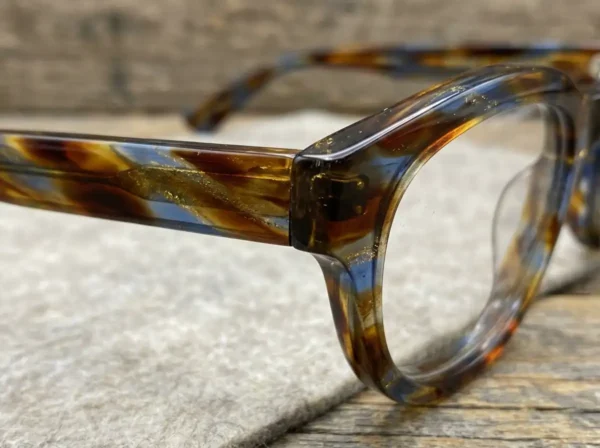
Different frame materials need specialized care approaches:
Italian Acetate Frames
City Optix’s European acetate collection requires specific maintenance:
Cleaning: Use only lukewarm water and mild soap. Acetate absorbs chemicals, so harsh cleaners permanently discolor or cloud material.
Polishing: Every 6-12 months, professional polishing restores original luster. Dr. Rich’s team uses rouge compounds and buffing wheels bringing back showroom shine.
Heat avoidance: Never leave acetate frames in hot cars, near stoves, in direct sunlight extended periods, or anywhere exceeding 120°F (49°C). Heat softens acetate, allowing frames to warp under their own weight.
Adjustment protocol: Acetate adjustments require careful heating before bending. Never attempt this at home—professionals use temperature-controlled heaters ensuring even heating without scorching or brittleness.
Aging character: Quality acetate develops rich patina over years, deepening colors and enhancing natural patterns. This isn’t degradation—it’s the material improving with age like fine leather. Embrace this character development rather than viewing it as wear Acetate Manufacturing Guild.
Titanium and Stainless Steel Frames
Metal frames demand different care:
Corrosion prevention: While titanium resists corrosion exceptionally well, San Francisco’s salt air still affects it over years. Weekly rinsing removes salt and moisture. Pay special attention to hinge barrels and screw channels where moisture collects.
Nose pad attention: Metal frames use either adjustable nose pads (requiring replacement every 6-12 months) or built-in saddle bridges (requiring surface cleaning to prevent slipping from oil buildup).
Flexibility maintenance: Titanium’s flexibility is a feature, not a flaw. Don’t worry if temples have slight play—this flexibility prevents breakage. However, excessive looseness requires professional adjustment.
Refinishing: Brushed titanium or coated stainless steel can be professionally refinished when finishes wear. City Optix coordinates with frame manufacturers for refinishing services maintaining original appearance.
Wood and Buffalo Horn Frames
Exotic natural materials need extra care:
Moisture balance: Wood and horn react to humidity extremes. Too dry and they become brittle; too moist and they swell. San Francisco’s moderate climate is actually ideal, but avoid extended exposure to bathroom steam or desert-dry heated rooms in winter.
Natural oils: Every 2-3 months, apply tiny amounts of mineral oil with soft cloth, let sit 5 minutes, and buff clean. This prevents drying and maintains material flexibility.
Professional servicing: These rare materials require specialists familiar with natural materials. City Optix maintains relationships with artisans who can repair, refinish, or restore exotic material frames.
Character acceptance: Natural materials show individual character—grain patterns, color variations, natural markings. These aren’t flaws; they’re what makes each frame unique. Trying to achieve uniform appearance works against the material’s nature.
When to Seek Professional Help (and What City Optix Can Fix)
DIY frame repair often causes more harm than good. Recognize when professional help is necessary:
Adjustable at City Optix:
-
- Loose temples or nose pads
-
- Frames sitting crooked on face
-
- Uneven temple pressure
-
- Slipping frames requiring constant adjustment
-
- Minor bends or warping
-
- Loose screws
-
- Worn nose pads
Repairable at City Optix (or via manufacturer):
-
- Broken hinges
-
- Cracked acetate
-
- Detached temples
-
- Stripped screws requiring re-tapping
-
- Worn or damaged temple tips
-
- Scratched or damaged finishes requiring professional refinishing
Requires Lens Replacement:
-
- Severely scratched lenses
-
- Damaged coatings
-
- Prescription changes
-
- Lens delamination
The key distinction: adjustments are quick and usually complimentary; repairs may require sending frames to manufacturers but preserve luxury frames worth hundreds of dollars; lens replacements are investments but maintain the frame itself.
Nob Hill clients particularly appreciate that City Optix’s independent brand relationships mean repair options for frames that chain stores would declare “not fixable, just buy new ones.”
The Environmental and Economic Case for Frame Longevity
Proper luxury eyewear care aligns with both environmental responsibility and economic wisdom:
Environmental impact: The eyewear industry produces over 1 billion frames annually, most destined for landfills within 2 years. Luxury frames maintained for 15-20 years eliminate 7-9 replacement cycles—reducing resource extraction, manufacturing energy, and waste significantly.
Economic reality: $800 frames lasting 15 years cost $53 annually plus minimal maintenance. $200 mass-market frames replaced every 2 years cost $100 annually plus likely additional pairs when primary frames break. Luxury with care costs less and performs better.
Insurance maximization: Most vision insurance covers new frames every 1-2 years. Clients can use these benefits for prescription sunglasses, computer glasses, or backup frames while maintaining primary luxury frames indefinitely.
Marina District’s environmentally conscious community increasingly values this approach—buying exceptional quality once and maintaining it indefinitely rather than participating in disposable fashion cycles.
Building Your Luxury Eyewear Care Kit
Proper maintenance requires minimal investment:
Essential items (total: ~$50):
-
- Hard protective case (usually included with quality frames)
-
- 5-pack quality microfiber cloths ($10)
-
- Small bottle pH-neutral soap ($5)
-
- Lens spray cleaner for quick touch-ups ($8)
-
- Small spray bottle for travel ($3)
-
- Jeweler’s screwdriver set with proper optical sizes ($15)
-
- Copy of frame specifications/measurements ($0 from City Optix)
Optional but valuable:
-
- Ultrasonic cleaner for home use ($30-50 for basic models)
-
- Replacement nose pads for your specific frames ($10)
-
- Anti-fog spray for San Francisco weather ($10)
-
- Frame case for car or office backup ($20)
Total investment: $50-150 one-time purchase protecting $600-1,200 frames for decades. Russian Hill clients who maintain wine cellars and designer wardrobes intuitively understand this value proposition—quality items deserve quality care.
City Optix’s Complimentary Lifetime Services
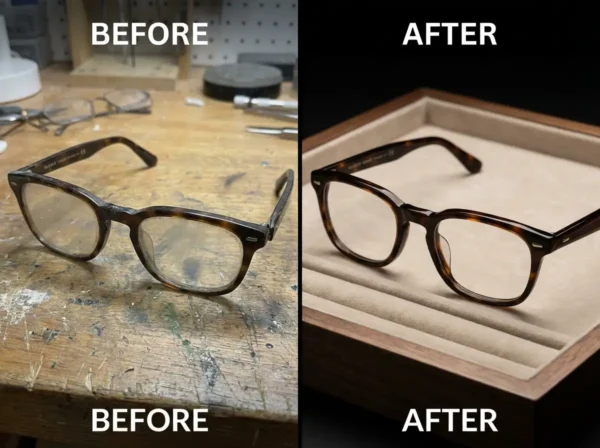
Frames purchased at City Optix include services protecting your investment:
Complimentary adjustments: Unlimited lifetime adjustments at no charge Professional cleaning: Ultrasonic cleaning during every visit Minor repairs: Loose screws, bent frames, minor issues corrected complimentary Nose pad replacement: At-cost replacement (typically $10-20) Manufacturer coordination: Dr. Rich’s relationships with independent brands facilitate warranty service and repairs
These services mean your frames receive professional attention maintaining optimal condition throughout their lifespan—impossible at chain stores where “lifetime service” applies only while you’re physically in the store and staff has time between sales quotas.
Protecting Your Investment Starts at City Optix
The best frame care begins before you leave City Optix with new eyewear. Dr. Rich’s team provides:
-
- Material-specific care instructions for your specific frames
-
- Proper case and cleaning supplies included
-
- Demonstration of correct cleaning technique
-
- Adjustment to ensure perfect fit from day one
-
- Documentation of frame specifications for future reference
-
- Education about your frame’s unique care requirements
Whether you’re wearing handcrafted Italian acetate, precision Japanese titanium, or exotic materials like buffalo horn or wood, Dr. Rich ensures you understand how to maintain your investment for decades of flawless performance and timeless style.
Ready to invest in luxury eyewear that lasts? Visit Dr. Jeff Rich at City Optix, 2154 Chestnut Street in San Francisco’s Marina District. Discover curated independent European and American frames with expert guidance ensuring your investment serves you beautifully for years to come. Call (415) 921-1444 to schedule your personalized consultation, or stop by to explore the finest independent eyewear in San Francisco.
About the Author: Dr. Jeff Rich, OD, has provided comprehensive optometric care and luxury eyewear expertise to San Francisco’s Marina District community since 1988. With over 37 years of experience in frame selection, fitting, and maintenance, Dr. Rich specializes in helping clients preserve their designer eyewear investments through proper care and professional service. His practice, City Optix, serves discerning clients throughout Marina District, Russian Hill, Nob Hill, and northern San Francisco neighborhoods who value quality craftsmanship and lasting style.
FAQ SECTION
Q: How should I clean luxury eyeglass frames properly?
A: Rinse frames under lukewarm water, apply a small drop of pH-neutral dish soap (no moisturizers), gently rub with fingertips, rinse thoroughly, shake dry, and use a clean microfiber cloth. Never use paper towels, tissues, glass cleaner, or hot water, as these damage coatings and materials. Clean designer frames daily to prevent buildup.
Q: How long should quality eyeglass frames last?
A: With proper care and professional adjustments, luxury eyeglass frames should last 10-20 years or longer. Premium materials like Italian acetate and titanium improve with age when maintained correctly. City Optix provides complimentary lifetime adjustments for frames purchased in the practice, helping preserve your investment for decades.
Q: How often should I get my designer frames professionally adjusted?
A: Visit your optician every 3-6 months for professional adjustments, even if frames feel comfortable. Regular adjustments prevent loosening, maintain optical alignment, ensure proper prescription performance, and catch minor issues before they become major problems. City Optix offers complimentary adjustments for all frames purchased in the practice.
Q: Can scratched luxury eyeglass lenses be repaired?
A: Minor surface scratches on plastic lenses can sometimes be professionally polished, but deep scratches or damaged anti-reflective coatings typically require lens replacement. Prevention through proper cleaning and storage is more effective than repair. Always use microfiber cloths, never paper products, and store frames in hard cases to prevent scratches.
Q: What should never be used to clean designer eyeglasses?
A: Never use glass cleaner (Windex), hand sanitizer, paper towels, tissues, napkins, clothing, hot water, saliva, or household cleaners on luxury eyewear. These products damage anti-reflective coatings, scratch lenses, and degrade frame materials. Only use lukewarm water, pH-neutral soap, and clean microfiber cloths for cleaning designer frames.
Q: How do I care for acetate eyeglass frames?
A: Clean acetate frames with lukewarm water and mild soap, never hot water or harsh chemicals. Avoid heat exposure (hot cars, direct sunlight, stoves) as it warps acetate. Schedule professional polishing every 6-12 months to restore luster. Quality acetate develops rich patina over time—this character enhancement is desirable, not degradation.
Q: Where can I get luxury eyeglass frames adjusted in San Francisco?
A: City Optix at 2154 Chestnut Street in San Francisco’s Marina District provides complimentary lifetime adjustments for frames purchased in the practice. Dr. Jeff Rich’s team uses specialized tools ensuring adjustments don’t damage finishes or materials. Professional adjustments every 3-6 months maintain optimal comfort and optical performance.
Q: Should I store eyeglasses in the case or leave them out?
A: Always store eyeglasses in hard protective cases when not wearing them. Cases prevent crushing, scratching, and environmental exposure. Never set frames lens-down on surfaces, leave them in cars, or store near heat sources. Proper storage between wears dramatically extends frame lifespan and maintains optical performance.