

If you’ve been told you have astigmatism, you’ve probably heard conflicting information about contact lenses. Some eye care providers still tell patients that glasses are their only option, or that contact lenses “won’t work well” for astigmatism. Meanwhile, you’ve watched friends without astigmatism enjoy the freedom of contacts while you remain stuck with glasses—fogging up on foggy Marina mornings, slipping down your nose during workouts, and limiting your lifestyle in ways you’ve grown to accept.
Here’s the truth: contact lenses for astigmatism work beautifully when fitted by someone who knows what they’re doing. At City Optix in San Francisco’s Marina District, Dr. Jeff Rich has spent over 40 years perfecting the art and science of fitting toric contact lenses—the specialized design that corrects astigmatism. His expertise has helped hundreds of patients who were told they “couldn’t wear contacts” finally experience clear, comfortable vision without glasses.
The difference between success and failure with astigmatism contact lenses often comes down to one factor: the skill and persistence of your eye care provider. Let’s explore why astigmatism makes contact lens fitting more complex, what modern toric lens technology can achieve, and why working with a specialist like Dr. Rich dramatically improves your chances of success.
Understanding Astigmatism: Why Your Vision Works Differently
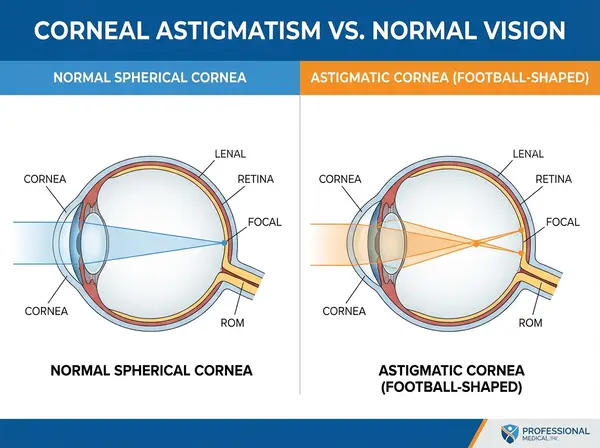
Before diving into contact lens solutions, it helps to understand what astigmatism actually means for your eyes. Most people think astigmatism is an “eye disease”—it’s not. It’s simply a variation in how your cornea (the clear front surface of your eye) is shaped.
Think of it this way: a normal cornea is shaped like a basketball—equally curved in all directions. An astigmatic cornea is shaped more like a football—steeper in one direction than the other. This irregular curvature causes light entering your eye to focus at multiple points instead of one clear point on your retina, resulting in blurred or distorted vision at all distances American Optometric Association.
How Astigmatism Affects Your Daily Life in San Francisco
Astigmatism doesn’t just blur your vision—it creates specific challenges that San Francisco residents know all too well. Reading street signs while navigating Russian Hill’s steep intersections becomes difficult when letters appear slightly doubled or smeared. Marina District professionals find that astigmatism makes extended screen time particularly exhausting, as your eyes work overtime trying to compensate for the blur.
Nighttime driving through the city presents unique difficulties. The lights from approaching cars on Lombard Street create starburst effects, halos appear around street lamps, and judging distances becomes uncertain. These aren’t just annoyances—they’re safety concerns that proper astigmatism correction completely eliminates.
For Nob Hill residents who value both function and fashion, glasses seem like the obvious solution. But glasses come with their own frustrations: distortion at the edges of your lenses, reflections from San Francisco’s famous fog and moisture, weight on your nose and ears during long workdays, and significant limitations during physical activities.
Why Regular Contact Lenses Don’t Work for Astigmatism
Standard contact lenses—called “spherical” lenses—provide the same corrective power across their entire surface. They work perfectly for simple nearsightedness or farsightedness where the eye needs equal correction in all directions. But astigmatism requires different amounts of correction in different meridians of your eye.
When someone with astigmatism tries wearing regular contact lenses, they experience persistent blur, fluctuating vision as the lens moves with each blink, eyestrain and headaches from their eyes working to compensate, and frustration that leads many to abandon contact lenses entirely.
This is why toric contact lenses were developed—specialized designs that correct astigmatism’s irregular corneal curvature while remaining comfortable and stable on your eye.
How Toric Contact Lenses Correct Astigmatism
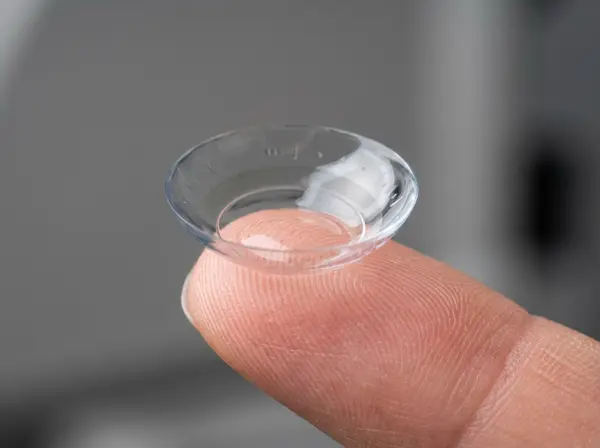
Toric contact lenses represent sophisticated optical engineering. Unlike spherical lenses, toric lenses have different powers in different meridians, matching the irregular curvature of astigmatic eyes. But here’s the challenge: for toric lenses to work, they must maintain a specific orientation on your eye.
Imagine wearing glasses upside down—they wouldn’t correct your vision properly because the prescription needs to align correctly with your eyes. The same principle applies to toric contacts. The lens must consistently orient itself in the proper position, even as your eyes blink, move, and produce tears throughout the day.
The Three Critical Elements of Toric Lens Design
1. Ballast Weighting: Many toric lenses use a slightly thicker zone at the bottom, using gravity to keep the lens properly oriented. This subtle design element keeps the lens from rotating out of position with each blink.
2. Prism Ballast: Some designs incorporate prism-shaped edges that interact with your eyelids, stabilizing the lens through the mechanical action of blinking rather than relying solely on gravity.
3. Accelerated Stabilization Design: Advanced toric lenses like those Dr. Rich often prescribes use sophisticated geometry that works with your eye’s natural shape and eyelid pressure, achieving stability within seconds of insertion Contact Lens Spectrum.
When properly fitted, modern toric lenses maintain their orientation within 5 degrees of perfect alignment—providing vision as crisp and stable as glasses, often better since contacts move with your eyes while glasses stay stationary on your face.
Why Astigmatism Contact Lens Fitting Requires Specialized Expertise
Here’s what separates successful toric lens fittings from the “tried contacts once, they didn’t work” experiences many astigmatism patients endure: expert fitting involves far more than handing you a trial pair and hoping for the best.
Dr. Rich’s approach to toric lens fitting reflects over four decades of experience and thousands of successful astigmatism patients. His process includes:
Comprehensive Corneal Mapping
Using advanced corneal topography, Dr. Rich creates a detailed map of your cornea’s shape—measuring not just the degree of astigmatism but its axis (orientation), identifying any irregularities that might affect lens performance, evaluating tear film quality and how it will interact with contact lenses, and assessing eyelid anatomy and how it will influence lens stability.
This detailed analysis allows Dr. Rich to select the optimal toric lens design for your unique eye shape before you ever try a lens.
Precise Prescription Determination
Astigmatism prescriptions are more complex than simple nearsightedness or farsightedness. They include three components: sphere (the basic focusing power), cylinder (the amount of astigmatism), and axis (the orientation of the astigmatism, measured in degrees from 0-180).
A toric contact lens prescription might look like: -2.50 -1.25 x 180. Each number matters tremendously. Dr. Rich carefully refines these values during fitting, understanding that what works perfectly in glasses may need adjustment when converted to contact lenses due to how contacts sit directly on your cornea rather than 12mm away like glasses.
Strategic Lens Selection
The contact lens industry offers dozens of toric lens designs, each with different stabilization methods, material properties, replacement schedules, and parameter ranges. Dr. Rich’s extensive experience allows him to match the right lens technology to your specific situation:
Daily Disposable Toric Lenses: Perfect for Marina District professionals who value convenience and maximum eye health. These lenses come in a sealed package each morning and are discarded each night—eliminating cleaning, reducing infection risk, and ensuring consistently fresh optics.
Monthly Toric Lenses: Cost-effective options for patients comfortable with lens care routines. Modern monthly toric lenses in silicone hydrogel materials allow exceptional oxygen transmission, keeping eyes healthy during extended wear.
Specialty Toric Designs: For high astigmatism, irregular corneas, or challenging fits, Dr. Rich works with custom toric lenses and hybrid designs that combine the optical precision of rigid lenses with the comfort of soft materials.
5 Reasons Astigmatism Patients Choose City Optix for Contact Lens Fitting

1. Expertise That Makes “Difficult” Cases Routine
Dr. Rich’s 40+ years specializing in complex contact lens fittings means he’s encountered virtually every challenge astigmatism presents. High astigmatism that exceeds most standard lens parameters? He works with custom manufacturers. Astigmatism combined with presbyopia (needing reading correction)? He fits multifocal toric lenses that few practitioners attempt. Post-LASIK astigmatism? His experience with specialty lenses provides solutions others won’t even try.
Patients travel from across the Bay Area specifically for Dr. Rich’s expertise after being told elsewhere that contacts “won’t work” for their eyes. More often than not, he proves those assessments wrong.
2. Access to Advanced Lens Technologies
City Optix isn’t limited to whatever contact lens brands a corporate chain pushes through supplier contracts. Dr. Rich maintains relationships with all major manufacturers plus specialty lens companies, accessing the full spectrum of toric lens technologies including cutting-edge daily disposable torics with advanced stabilization, custom-made toric lenses for unusual prescriptions, hybrid lenses combining rigid and soft materials, and scleral lenses for the most challenging corneal shapes.
This comprehensive access means Dr. Rich selects the best lens for your eyes, not just the lens his practice is contractually obligated to promote.
3. Persistence Until Achieving Optimal Results
Many eye care providers give astigmatism patients one or two lens trials, then default to “glasses work better for you” when immediate success doesn’t happen. Dr. Rich takes a different approach—viewing toric lens fitting as a process requiring patience and refinement.
He’ll adjust lens parameters, try different brands and designs, modify prescriptions based on your real-world experience, and continue working until achieving the vision quality and comfort you deserve. This persistence transforms “I can’t wear contacts” into “I love my contacts” for patients who previously gave up.
4. Real-World Vision Testing Beyond the Exam Room
Dr. Rich doesn’t just check your vision with trial lenses under perfect exam room conditions. He sends you out to experience them during actual daily activities: working at your computer in your Nob Hill office, navigating evening commutes through Marina traffic, reading restaurant menus in dim lighting, and enjoying weekend activities that matter to your life.
This real-world testing reveals issues that exam room evaluations miss—subtle rotation problems that cause intermittent blur, comfort issues that develop after several hours of wear, or vision fluctuations with different activities. Dr. Rich uses this feedback to refine your prescription until it performs flawlessly throughout your day.
5. Long-Term Partnership Supporting Your Vision
Your relationship with Dr. Rich doesn’t end when you leave with your contact lenses. He provides ongoing support including follow-up visits ensuring continued comfort and vision quality, prescription updates as your eyes change over time, troubleshooting if issues develop, and guidance on proper lens care and eye health maintenance.
This continuity proves invaluable for astigmatism patients whose needs often evolve. As you age, your astigmatism may change. As contact lens technology advances, better options emerge. Dr. Rich ensures you benefit from both his expertise and ongoing innovation in the field.
Debunking Common Myths About Astigmatism and Contact Lenses
After four decades of fitting astigmatism patients with contact lenses, Dr. Rich has heard every misconception. Let’s address the most common myths that prevent people from experiencing the freedom contacts provide:
Myth #1: “Astigmatism means I can’t wear contacts.”
Reality: Modern toric contact lenses successfully correct even high levels of astigmatism. Dr. Rich regularly fits patients with 2.00, 3.00, or even higher astigmatism with excellent results. The key is working with someone who has expertise in toric lens fitting and access to advanced lens designs.
Myth #2: “Toric lenses are uncomfortable because they’re thicker.”
Reality: While early toric lenses were indeed thicker and less comfortable than standard lenses, modern designs use advanced materials and sophisticated stabilization methods that eliminate bulk. Most patients report that properly fitted toric lenses feel indistinguishable from regular contacts.
Myth #3: “Toric lenses rotate and make your vision blurry.”
Reality: Poorly fitted toric lenses certainly can rotate, causing vision fluctuation. But expertly fitted toric lenses maintain stable orientation through proper design selection, precise parameter specification, and careful evaluation of how the lens interacts with your unique eye shape and eyelid anatomy. When Dr. Rich fits toric lenses, stability is virtually guaranteed American Academy of Optometry.
Myth #4: “Toric lenses are too expensive.”
Reality: Daily disposable toric lenses typically cost $40-70 per month—less than most San Francisco residents spend on coffee. Monthly replacement toric lenses run $25-40 monthly. Compared to the cost of prescription sunglasses, sports eyewear, and constantly updating glasses prescriptions, contact lenses often prove more economical long-term.
Myth #5: “I’m too old to start wearing contacts for my astigmatism.”
Reality: Dr. Rich successfully fits toric contact lenses for patients in their 60s, 70s, and even 80s who are trying contacts for the first time. Age isn’t the limiting factor—motivation and willingness to learn proper insertion and removal technique are what matter. Many older patients discover that contacts actually make their lives easier, eliminating the need to constantly search for misplaced reading glasses or switch between different pairs throughout the day.
What to Expect During Your Toric Contact Lens Fitting at City Optix
Understanding the fitting process helps you know what to expect when you schedule your appointment with Dr. Rich:
Initial Consultation and Assessment (30-45 minutes)
Your first visit includes comprehensive eye examination measuring your exact prescription including astigmatism degree and axis, corneal topography mapping your cornea’s shape and irregularities, evaluation of your tear film quality and eye health, discussion of your lifestyle needs and vision priorities, and explanation of suitable toric lens options for your specific situation.
Dr. Rich takes time to understand not just your prescription but your life—how you use your vision for work, what activities matter most to you, and what frustrations you’ve experienced with glasses or previous contact lens attempts.
Trial Lens Fitting (During Same Visit)
Based on his assessment, Dr. Rich selects optimal trial lenses and teaches you proper insertion and removal techniques. He then evaluates lens fit, checking centration, movement with blinking, stability of orientation, and comfort. He assesses your vision with the trial lenses through various tests including distance acuity, near reading, computer distance vision, and real-world tasks like looking at your phone.
Most patients leave this first appointment wearing trial lenses, experiencing immediate improvement in vision and freedom compared to glasses.
Real-World Trial Period (3-7 Days)
Dr. Rich sends you into your actual life with trial lenses, asking you to pay attention to vision clarity throughout the day, comfort during extended wear, performance during specific activities (driving, computer work, sports), and any situations where the lenses don’t perform perfectly.
This trial period provides critical information that exam room testing simply cannot replicate. Does slight rotation occur during intense computer work? Do the lenses feel dry during your afternoon video conferences? Does vision fluctuate in windy conditions at Crissy Field? This feedback guides refinements.
Follow-Up and Fine-Tuning (15-30 minutes)
At your follow-up visit, Dr. Rich evaluates your experience with the trial lenses, assesses lens condition and fit after real-world wear, makes any necessary adjustments to prescription or lens type, and either finalizes your prescription or selects different trial lenses for further testing.
For straightforward fits, this follow-up visit often results in your final prescription. For more complex situations, Dr. Rich may try additional lens designs until achieving optimal results. His persistence and expertise mean that even challenging fits ultimately succeed.
Life After Glasses: What Astigmatism Patients Discover About Contact Lenses
Patients who successfully transition from glasses to toric contact lenses consistently report benefits they never anticipated:
Peripheral Vision Freedom: Glasses limit your field of view to the lens area. Contacts provide unrestricted peripheral vision—crucial for San Francisco activities like cycling through Marina Green, navigating Russian Hill’s narrow sidewalks, or simply being aware of your surroundings in the city.
No More Lens Reflections or Glare: San Francisco’s fog, rain, and bright bay-reflected sunlight create constant issues for glasses wearers—water droplets obscuring vision, reflections from screens and windows, and glare making driving challenging. Contacts eliminate all these problems.
Active Lifestyle Compatibility: Whether you’re doing yoga at a Nob Hill studio, running along the Embarcadero, playing tennis, or simply walking up steep streets without glasses slipping down your nose, contacts transform how you move through the world.
Consistent Vision Quality: Glasses sit 12mm from your eyes, creating optical distortions especially in higher prescriptions and at the periphery of lenses. Contacts sit directly on your cornea, providing more natural vision across your entire field of view.
Confidence in Appearance: While many San Francisco residents embrace glasses as fashion accessories, others feel more like themselves without frames. Contact lenses allow you to choose—wear glasses when you want the look, go without when you prefer. The freedom to decide proves liberating.
Caring for Your Toric Contact Lenses: What Dr. Rich Wants You to Know

Successful long-term contact lens wear depends on proper care and healthy habits. Dr. Rich provides comprehensive guidance ensuring your lenses remain comfortable and your eyes stay healthy:
Daily Disposable Toric Lenses: The Simplest Option
For patients who value maximum convenience and eye health, daily disposable toric lenses eliminate cleaning and storage. You open a fresh pair each morning and discard them each night. This approach minimizes infection risk, ensures consistently clean optics, and eliminates the hassle of cleaning solutions and cases.
Daily disposables cost more per lens than monthly options, but many patients find the convenience and health benefits worth the investment. For busy Marina District professionals, the time savings alone justifies the cost.
Monthly Toric Lenses: Proper Care Essentials
If you choose monthly replacement toric lenses, proper care proves essential. Dr. Rich emphasizes clean hands before handling lenses, fresh solution for every cleaning and storage cycle (never reusing solution), rubbing lenses gently during cleaning even with “no-rub” solutions, replacing your lens case every three months, and never sleeping in lenses unless specifically designed and prescribed for extended wear.
Following these guidelines keeps your lenses comfortable and your eyes healthy. Shortcuts lead to discomfort, infections, and ultimately, abandoned contact lenses sitting in a drawer.
When to Contact Dr. Rich
While minor lens sensations are normal during adaptation, certain symptoms require professional attention including persistent redness or irritation, vision that’s consistently blurred or fluctuating, pain beyond mild discomfort, discharge or unusual tearing, and sensitivity to light.
These symptoms may indicate infection, poor lens fit, or other issues requiring adjustment. Dr. Rich provides same-day appointments for contact lens problems, ensuring issues get addressed before they become serious.
Special Considerations: Astigmatism Combined with Other Vision Needs
Many astigmatism patients face additional vision challenges requiring specialized solutions—areas where Dr. Rich’s expertise proves particularly valuable:
Astigmatism + Presbyopia (Over 40)

As you reach your 40s, your eyes lose the ability to focus on near objects—a natural process called presbyopia. If you have both astigmatism and presbyopia, you need contact lenses that correct both conditions simultaneously.
Multifocal toric contact lenses accomplish this, providing clear distance vision through the astigmatism correction and clear near vision through the multifocal design. These lenses represent some of the most sophisticated optics in optometry, and fitting them requires significant expertise. Dr. Rich’s experience with complex lens designs means Russian Hill and Nob Hill professionals over 40 can enjoy contact lenses without carrying reading glasses.
Astigmatism + Dry Eyes
San Francisco’s climate and screen-heavy lifestyles create widespread dry eye issues. Combining astigmatism with dry eyes can complicate contact lens wear, but doesn’t prevent it. Dr. Rich selects lens materials with high oxygen transmission and moisture retention properties, recommends rewetting drops compatible with your specific lenses, adjusts replacement schedules if needed, and treats underlying dry eye conditions with prescription medications when appropriate.
Many patients discover that their “dry eye problems with contacts” were actually poor lens selection or untreated dry eye disease—both correctable with proper management.
Post-LASIK or Post-Refractive Surgery Astigmatism
Some patients who underwent LASIK or other refractive surgery years ago develop residual or regression astigmatism as their eyes change over time. Standard toric lenses often don’t fit properly on post-surgical corneas due to the altered shape. Dr. Rich uses specialty lens designs including scleral lenses that vault over the cornea, custom soft lenses designed for post-refractive surgery eyes, and hybrid lenses combining benefits of both rigid and soft designs.
His expertise in these advanced fitting techniques helps post-LASIK patients who thought their only option was returning to glasses Optometry and Vision Science.
Why San Francisco Astigmatism Patients Trust City Optix
Beyond Dr. Rich’s technical expertise, City Optix offers advantages that matter for busy San Francisco residents:
Convenient Marina District Location: Located at 2154 Chestnut Street, City Optix is easily accessible for Marina, Russian Hill, Nob Hill, and Cow Hollow residents. Street parking and proximity to MUNI lines make appointments convenient even without a car.
Flexible Scheduling: Understanding that San Francisco professionals have demanding schedules, City Optix accommodates early morning appointments, lunch-hour visits, and evening availability when possible.
Luxury Eyewear as Backup: Even committed contact lens wearers need quality glasses for mornings, evenings, or days when eyes need a break. City Optix’s curated collection of designer frames ensures your backup eyewear reflects your style—Cartier, Chanel, Jacques Marie Mage, and exclusive independent designers you won’t find at chain stores.
Insurance Expertise: City Optix accepts most major vision insurance plans and helps maximize your contact lens benefits, explaining coverage clearly and presenting options at various price points without pressure.
Community Investment: As a San Francisco Legacy Business designated in 2024, City Optix represents over 40 years of commitment to the Marina District community. Dr. Rich isn’t just your optometrist—he’s your neighbor, invested in your long-term vision health and satisfaction.
Ready to Experience Clear Vision Without Glasses?
If you have astigmatism and have been frustrated by glasses or told that contact lenses won’t work for you, it’s time to experience what expert fitting can achieve. Dr. Jeff Rich’s four decades of specialization in complex contact lens fitting has helped hundreds of astigmatism patients discover the freedom and clarity that properly fitted toric lenses provide.
Don’t let outdated information or previous unsuccessful attempts prevent you from enjoying contact lenses. Modern toric lens technology combined with Dr. Rich’s expertise delivers results that seemed impossible just years ago.
Call City Optix today at (415) 921-1444 to schedule your toric contact lens consultation, or visit us at 2154 Chestnut Street in San Francisco’s Marina District. Your clearest vision is closer than you think.
About the Author: Dr. Jeff Rich, OD, has specialized in complex contact lens fitting for over 40 years at City Optix in San Francisco’s Marina District. His expertise in toric contact lenses for astigmatism, multifocal lens designs, and specialty fittings for challenging prescriptions has helped patients throughout San Francisco achieve clear, comfortable vision. He serves on Johnson & Johnson’s Acuvue Leadership Advisory Panel and maintains VSP Premiere Doctor status. City Optix was designated a San Francisco Legacy Business in 2024.
FAQ SECTION
Q: Can you wear contact lenses if you have astigmatism?
A: Yes, absolutely. Toric contact lenses are specifically designed to correct astigmatism. Modern toric lenses provide vision quality equal to or better than glasses when properly fitted by an experienced optometrist like Dr. Rich at City Optix in San Francisco’s Marina District.
Q: How do toric contact lenses stay in the correct position on your eye?
A: Toric lenses use stabilization features like ballast weighting (slightly thicker zones), prism ballast (specially shaped edges), or accelerated stabilization designs that work with your eyelids and eye shape to maintain proper orientation. Expert fitting ensures the lens design matches your unique eye anatomy for consistent stability.
Q: Are toric contact lenses more expensive than regular contacts?
A: Toric lenses typically cost 20-40% more than standard contact lenses, ranging from $40-70 monthly for daily disposables to $25-40 monthly for monthly replacement lenses. Many patients find this small additional cost worthwhile for the freedom from glasses and improved quality of life.
Q: Can Dr. Rich fit contact lenses for high astigmatism in San Francisco?
A: Yes, Dr. Rich specializes in fitting high astigmatism cases that many practitioners won’t attempt. His 40+ years of experience and access to custom toric lenses, hybrid designs, and specialty manufacturers means he successfully fits patients with 2.00, 3.00, or even higher astigmatism regularly at City Optix.
Q: How long does it take to get used to toric contact lenses?
A: Most patients adapt to toric contact lenses within 3-7 days. Initial awareness of the lens presence typically disappears within the first week. Dr. Rich provides comprehensive insertion and removal training, ensuring you feel confident managing your lenses from day one.
Q: Can you wear toric contact lenses if you’re over 40 and need reading glasses?
A: Yes, multifocal toric contact lenses correct both astigmatism and presbyopia (age-related near vision loss) simultaneously. Dr. Rich has extensive experience fitting these advanced lens designs for San Francisco professionals who want clear vision at all distances without glasses.
Q: What should I do if my toric contact lenses feel uncomfortable or my vision is blurry?
A: Contact City Optix immediately at (415) 921-1444. Discomfort or blurred vision may indicate lens rotation, poor fit, or other correctable issues. Dr. Rich provides same-day appointments for contact lens problems, ensuring quick resolution before minor issues become serious.
Q: Does City Optix accept vision insurance for toric contact lens fitting in Marina District?
A: Yes, City Optix accepts most major vision insurance plans including VSP, EyeMed, and MES. The team verifies your contact lens benefits before your fitting appointment and helps maximize coverage while explaining any costs beyond standard benefits.